Dynamic ARP Inspection (DAI)
ccnp-switching
Notes on Dynamic ARP Inspection, showing an ARP poisoning demo and the commands to enable DAI and trust uplink interfaces on Cisco switches.
ARP Poisoning
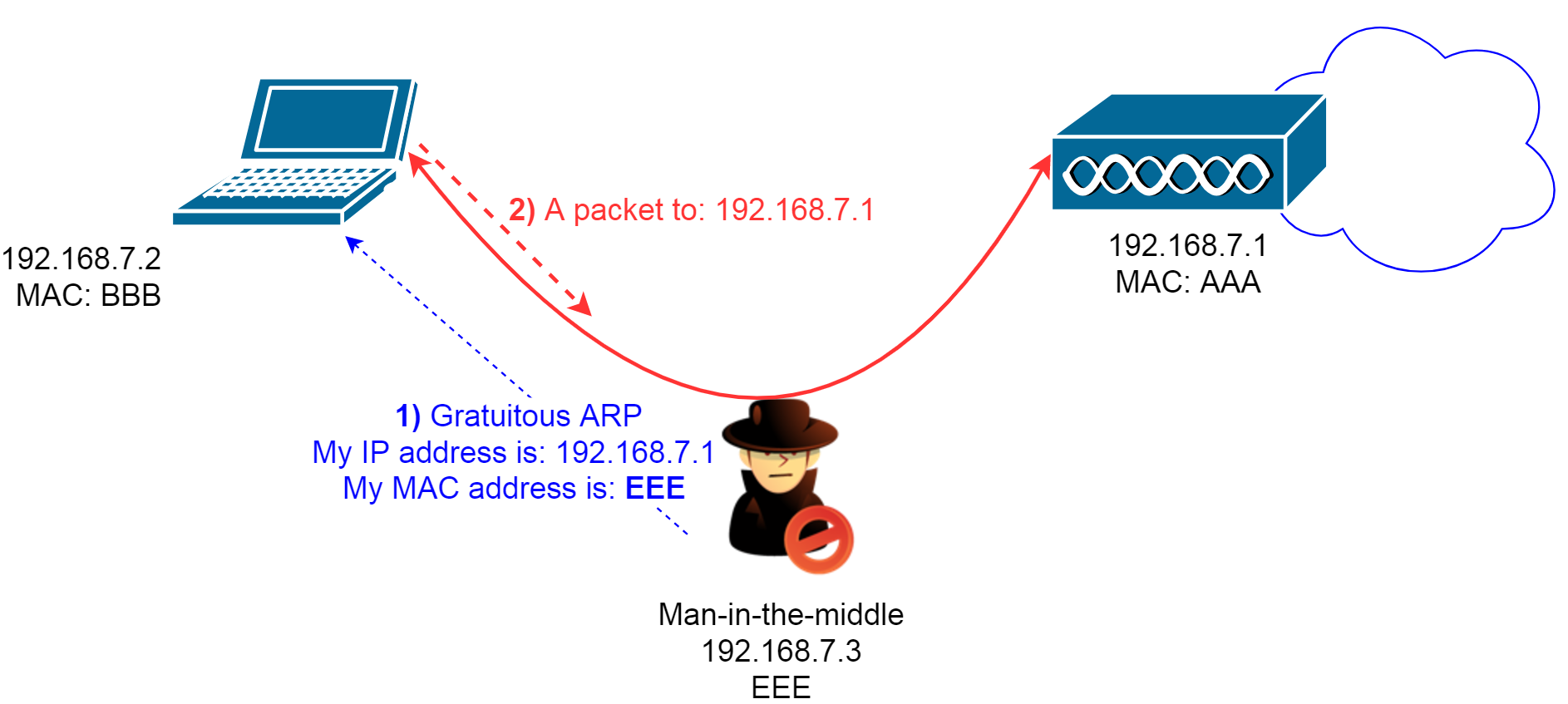
DAI
SW1(config)#interface vlan 1
SW1(config-if)#ip address 192.168.7.1 255.255.255.0
SW1(config-if)#no shutdown
SW1#show interfaces vlan 1 | i bia
  Hardware is Ethernet SVI, address is 0097.81b6.8001 (bia 0097.81b6.8001)
SW2-Client#ping 192.168.7.1
Type escape sequence to abort.
Sending 5, 100-byte ICMP Echos to 192.168.7.1, timeout is 2 seconds:
.!!!!
Success rate is 80 percent (4/5), round-trip min/avg/max = 4/5/7 ms
SW2-Client#show arp 192.168.7.1
Protocol  Address          Age (min)  Hardware Addr   Type   Interface
Internet  192.168.7.1             0   0097.81b6.8001  ARPA   Vlan1
Now the attacker does ARP poisoning. Let us see again the ARP table of the client:
SW2-Client#show arp 192.168.7.1
Protocol  Address          Age (min)  Hardware Addr   Type   Interface
Internet  192.168.7.1             0   b826.ebc5.a07e  ARPA   Vlan1
DAI Configuration
SW1(config)#ip arp inspection vlan 1
Then all interfaces in vlan 1 become untrusted. Then:
- DAI intercepts ARP requests and replies on untrusted interfaces.
- Limits the number of incoming ARP packets to 15 per second on an untrusted interface.
- Compares contents with the DHCP snooping binding database.
SW1(config)#interface gigabitEthernet 3/3
SW1(config-if)#ip arp inspection trust
Trusted ports:
- DAI does NOT inspect incoming ARP packets on trusted interfaces
Note: DAI does NOT inspect outgoing ARP packets on any interface