Course 3 of 5 in the Deep Learning Specialization by Andrew Ng (DeepLearning.AI).
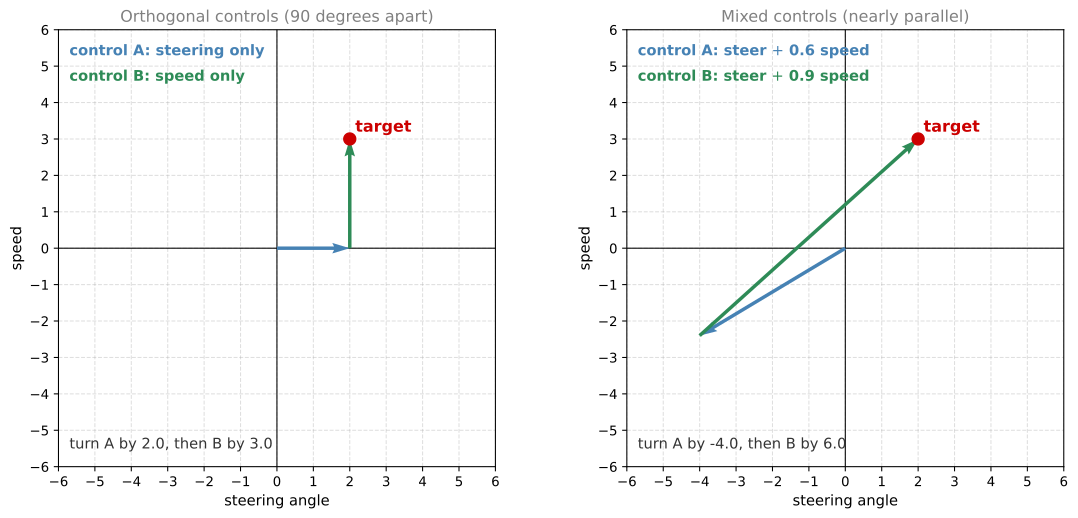
Why machine learning strategy matters, and how orthogonalization gives you one knob per problem when tuning a supervised learning system.
Single number evaluation metrics, satisficing versus optimizing metrics, choosing dev and test set distributions and sizes, and when to change your target.
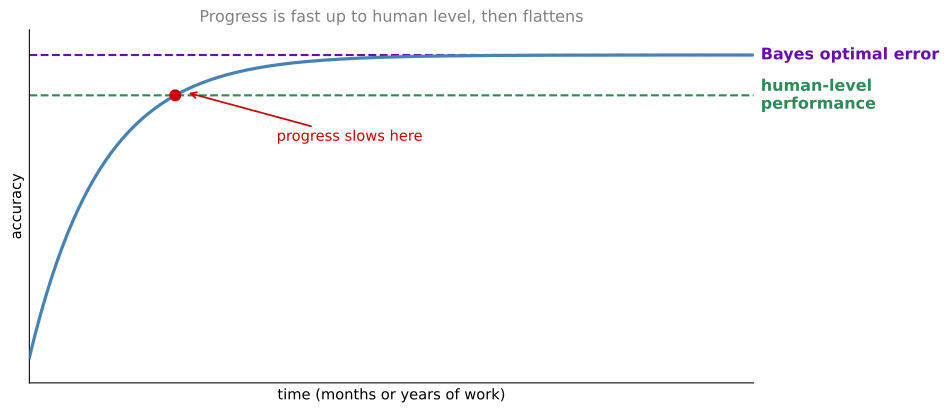
Bayes optimal error, human-level performance as a proxy for it, avoidable bias versus variance, and the guidelines for improving your model.
A machine learning flight simulator case study covering metric choice, dev and test splits, bias and variance diagnosis, and when to change the target.
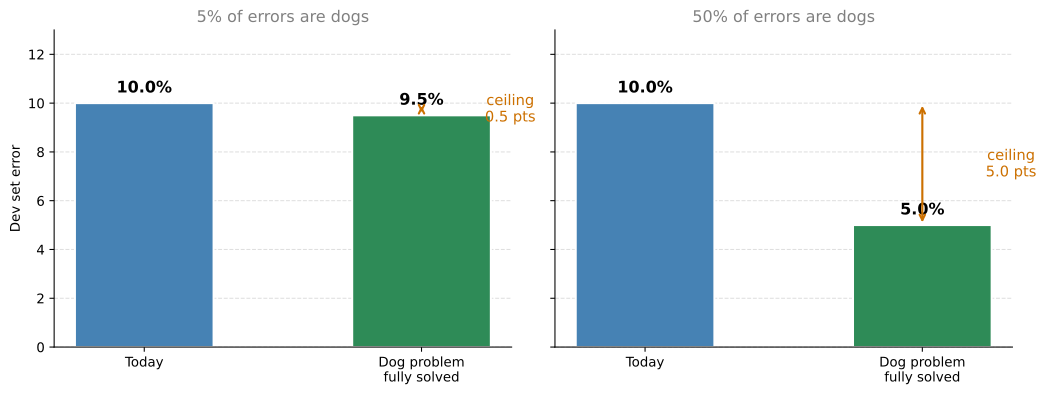
Counting mistakes by category to decide what to work on next, deciding when incorrect labels are worth fixing, and why the first system should be quick.
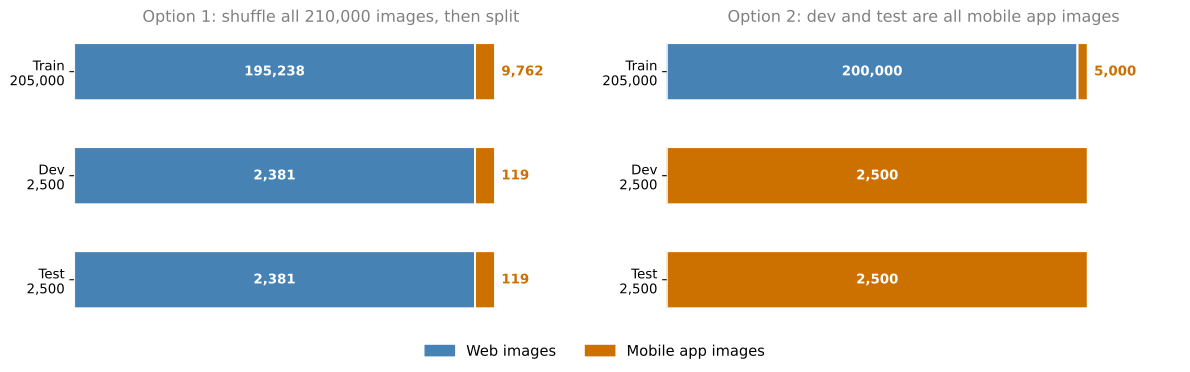
Splitting data when training comes from a different distribution than dev and test, using a training-dev set to spot data mismatch, and how to address it.
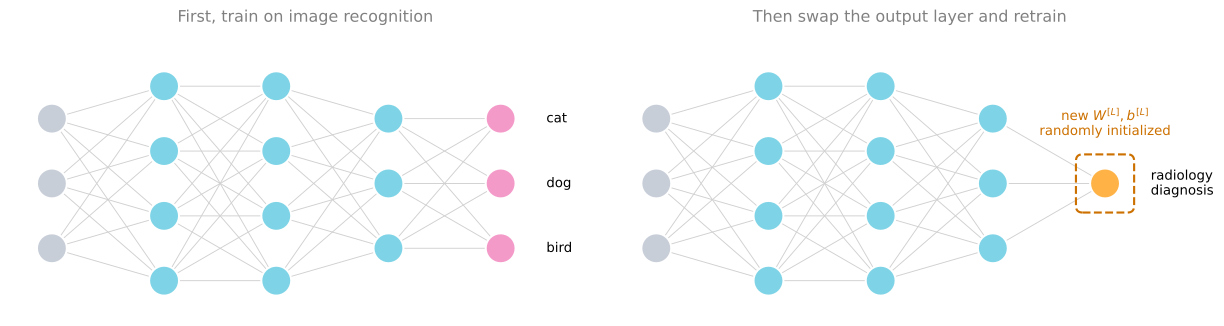
Transfer learning to reuse what a network learned on one task, multi-task learning to train one network on several tasks, and when each one makes sense.
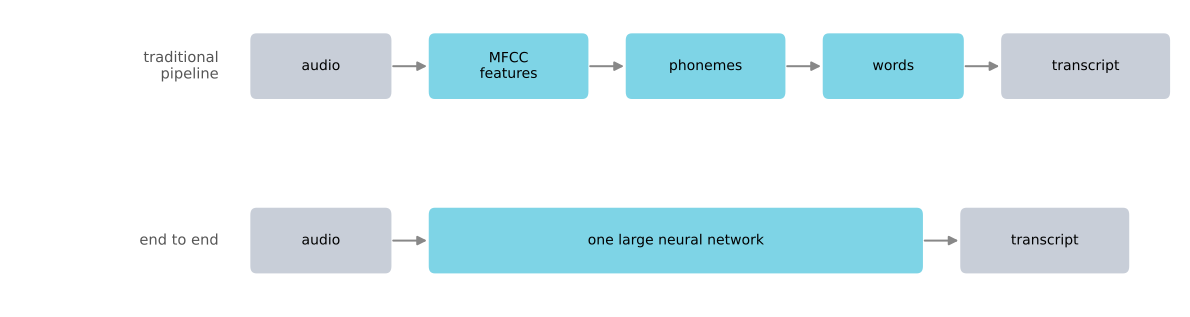
What end-to-end deep learning replaces, why some systems still work better split into stages, and how to decide whether an end-to-end approach fits your problem.
A machine learning flight simulator case study on autonomous driving covering error analysis, data mismatch, data synthesis, and transfer versus end-to-end learning.